Current Research

High Temperature Heat Pumps
Team: Joe Huyett, Cyrus Johnston, Dalton Moore, Joy St. Clair, Gavin Geer Past: Kelly Ryan Partners: AtmosZero
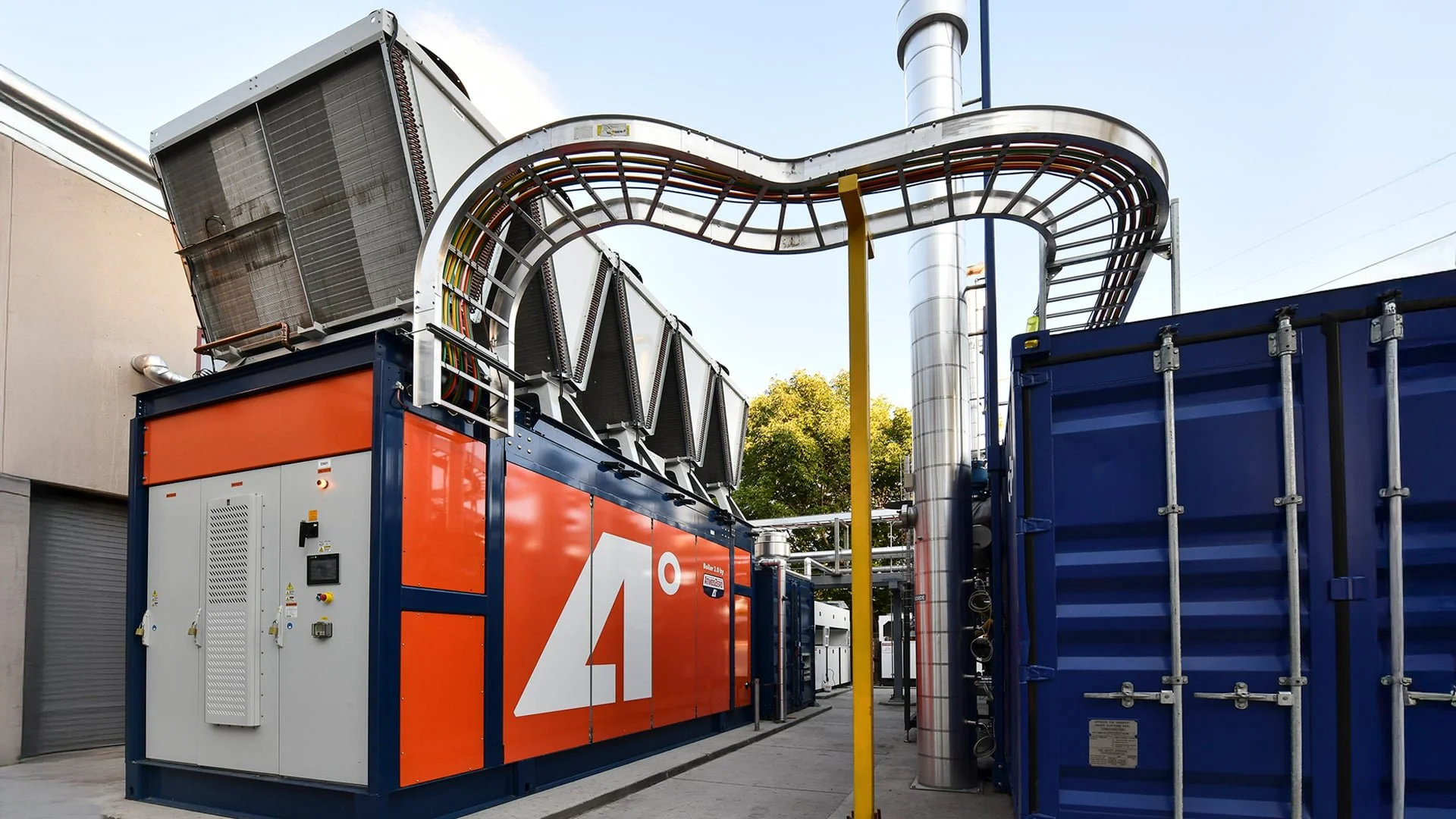
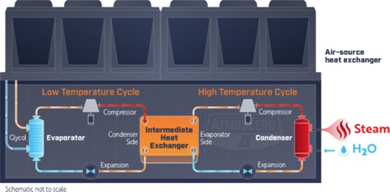
Heat for industrial processes must be decarbonized to achieve societal emissions goals. Heat pumps offer a promising way to electrify heat to reduce emissions with lower operating costs than conventional electric boilers. In 2022, Dr. Todd Bandhauer cofounded AtmosZero to develop and commercialize steam heat pumping technology. Since then, the REACH CoLab has partnered with AtmosZero to provide research and operations support to accelerate deployment of steam generating heat pumps.
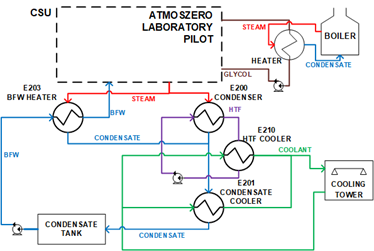
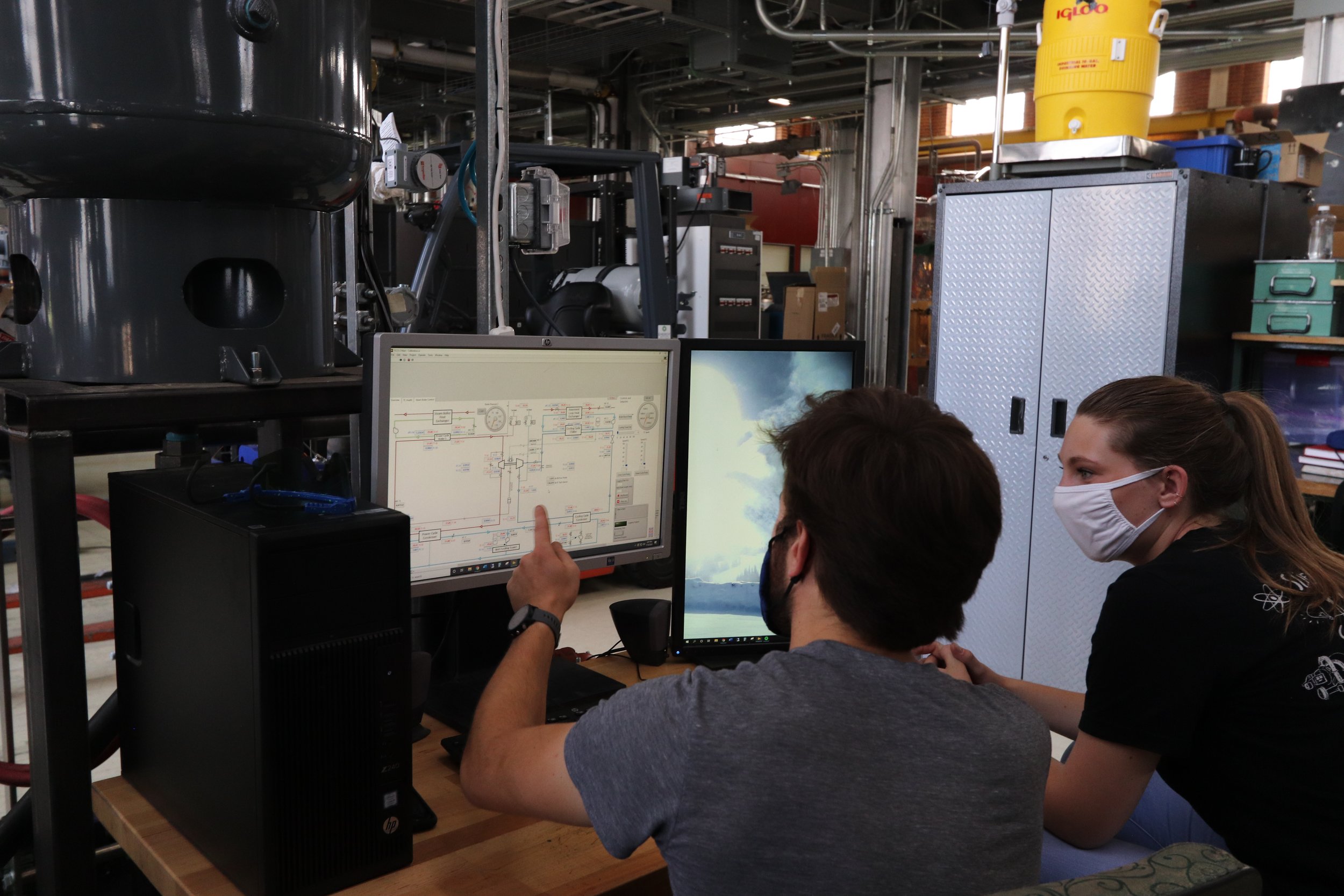
Our first collaboration was to build a test facility for AtmosZero's laboratory pilot unit. While AtmosZero developed their first heat pump unit and custom-built high efficiency compressors, CSU designed and constructed a custom test bed that could demonstrate the capabilities of the heat pump unit. The test facility offered a controlled environment for technology development, controls tuning, and performance demonstration over a wide range of conditions. The test facility controls the heat input to target a specified source temperature, provides feedwater, and receives steam to reject the heat to a cooling tower, simulating the end-use heat pump consumer. The laboratory pilot unit was successfully commissioned in 2023, and continues operation today as a research and development hub for testing new components and configurations. During this time, we also performed techno-economic modeling and transient simulations for the heat pump unit under an ARPA-E SEED grant.
Since the laboratory pilot deployment, the REACH CoLab has continued to partner with AtmosZero on research and development activities. In 2024 and 2025, we collaborated on a proposed pilot heat pump unit for simultaneous refrigeration and steam production under a Department of Energy award from the Industrial Technologies Office. For this award, we performed techno-economic analysis and controls modeling and also modified our test facility to conduct testing at lower source temperatures.
In 2025, we also helped conduct preliminary testing that positioned AtmosZero to win the New York State Energy Research and Development Authority (NYSERDA) Technology Prize for a deployment project at a large hotel in midtown Manhattan.
Recent Publications:
Hybrid Fuel Cell-IC Engine
Team: Shane Garland, Sofia Ananieva, Colin Christensen Past: Rustin Jensen, Lars Mitchel, Victor Reyes-Flores, Hugo Mettes Partners: Dan Olsen, Bret Windom, Colorado School of Mines, Kohler Power Systems, Air Squared

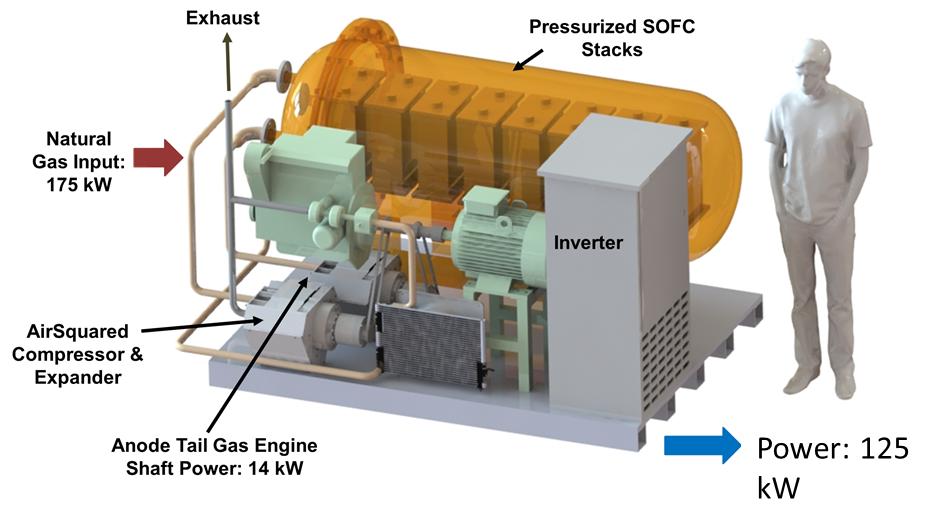
The unique and beneficial characteristics of solid oxide fuel cell (SOFC) technology hold much promise for their eventual widespread adoption in numerous power generation or combined heat and power applications including buildings, industrial, and data centers. The CSU team, in partnership with Colorado School of Mines and Rehlko, are working to develop a novel hybrid stationary power system comprised of an intermediate temperature (600°C) metal-supported SOFC stack integrated with a high efficiency internal combustion engine. This prototype system at the 80 kW scale can operate on a wide range of fuels including hydrocarbons and can achieve electrical efficiencies approaching 70% based on fuel LHV. This work has been funded under the ARPA-e INTEGRATE program and more recently the Industrial Technologies Office (Grant DE-EE0011201).
Recent Publications:
Turbo-Compression Cooling System (TCCS)
Team: Derek Young, Matias Valencia-Delgado Past: Taylor Stoll, Ben Platt, Nick Roberts, Achyut Paudel, Torben Grumstrup, Shane Garland, John Simon, Alex Grauberger Partners: 2G Energy, Inc., Modine, Barber-Nichols
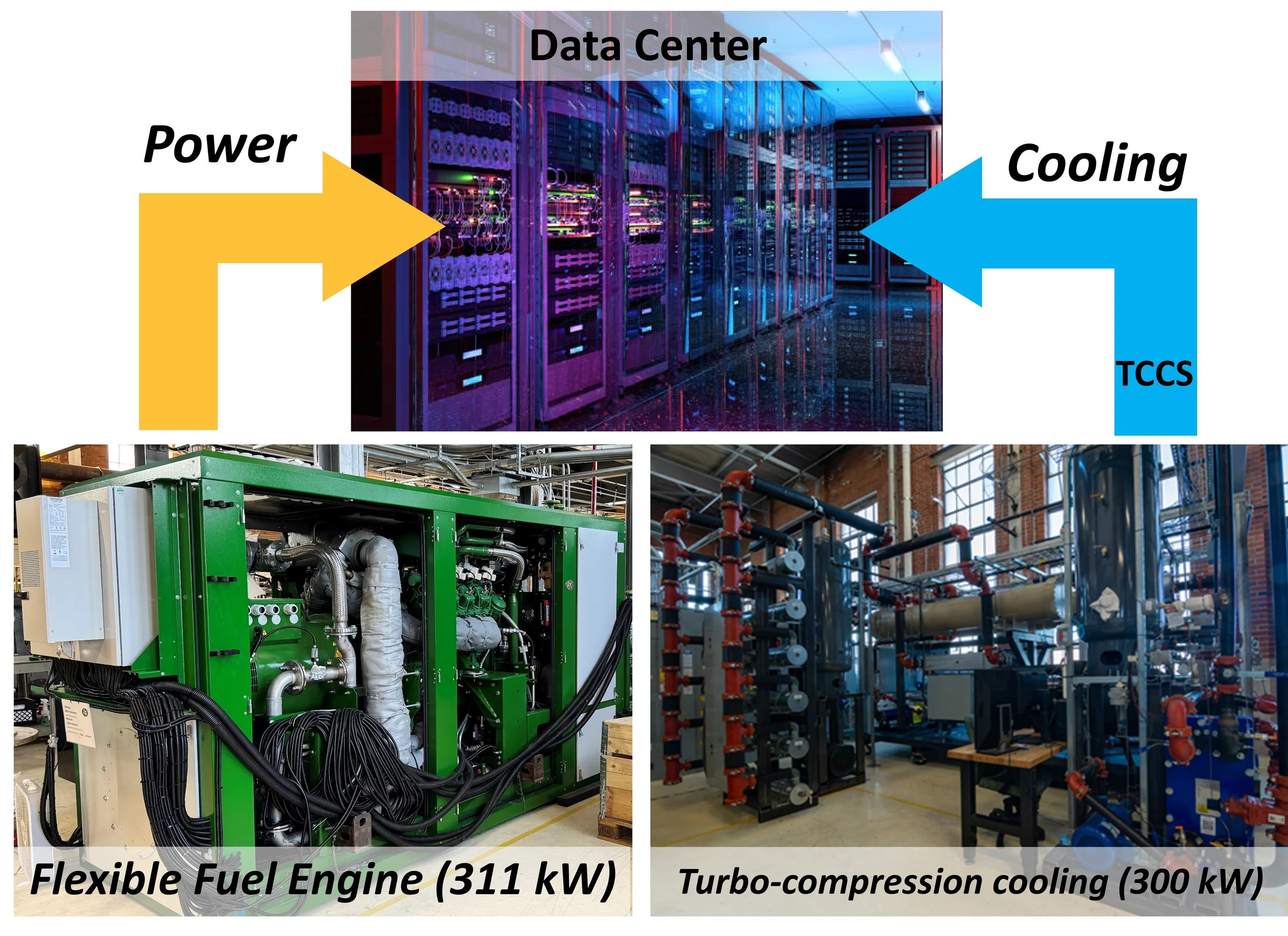
Data centers provide essential services to many aspects of modern life and have a significant impact on the US economy. The electric grid does not have enough transmission/distribution assets or generation capacity to accommodate new data center customers, especially those focused on AI workloads. As a result, projections show that 30% of data centers will have on-site power by 2030 to overcome grid limitations.
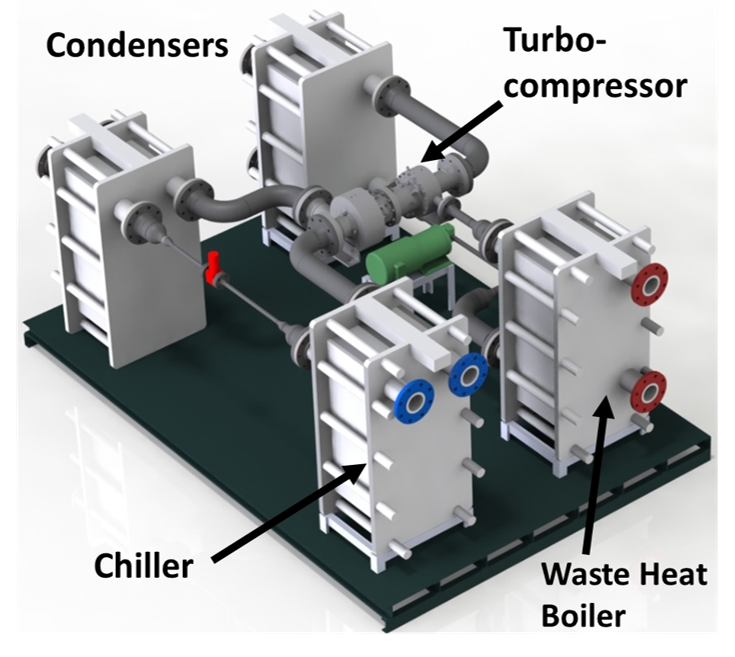
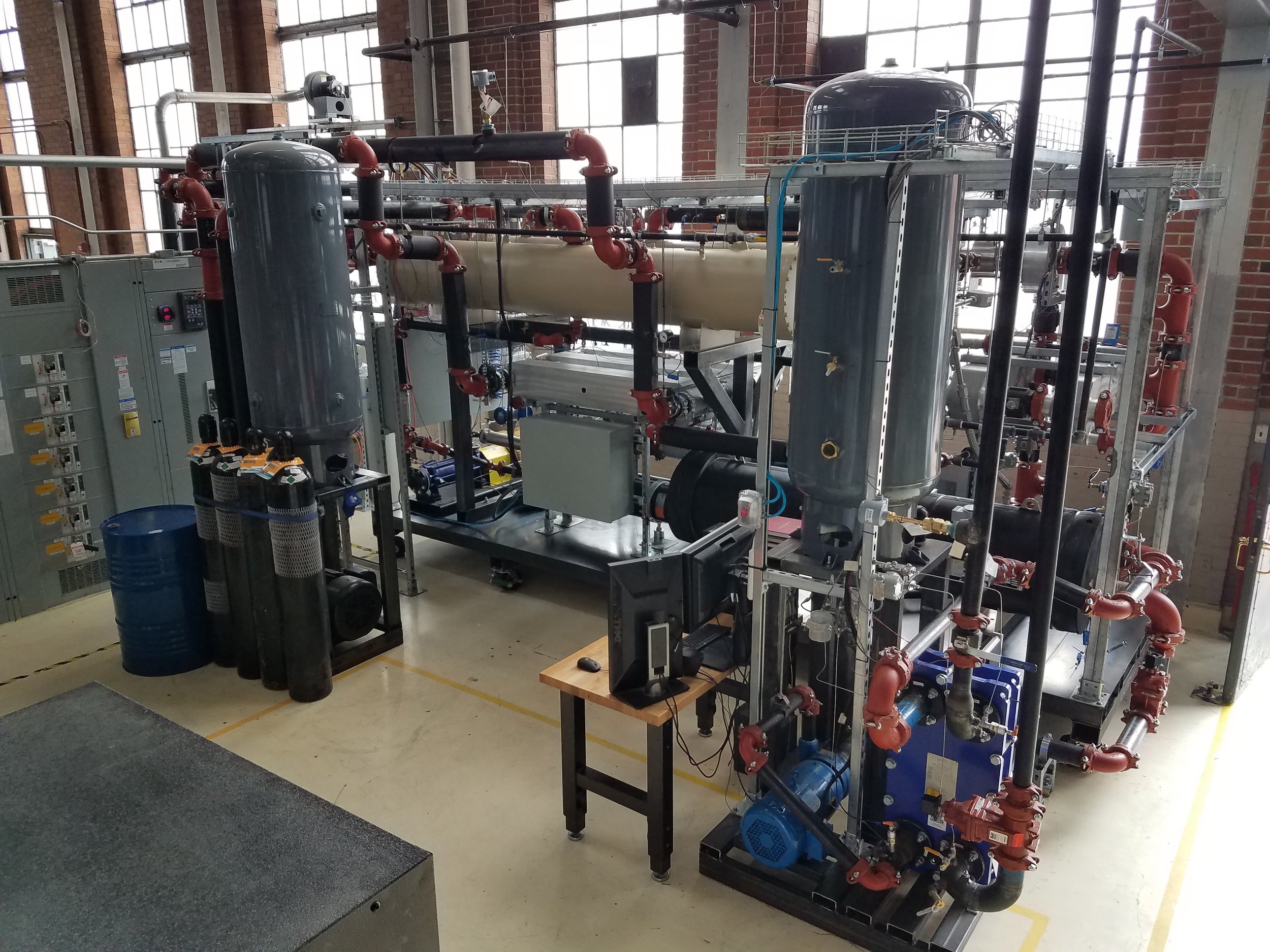
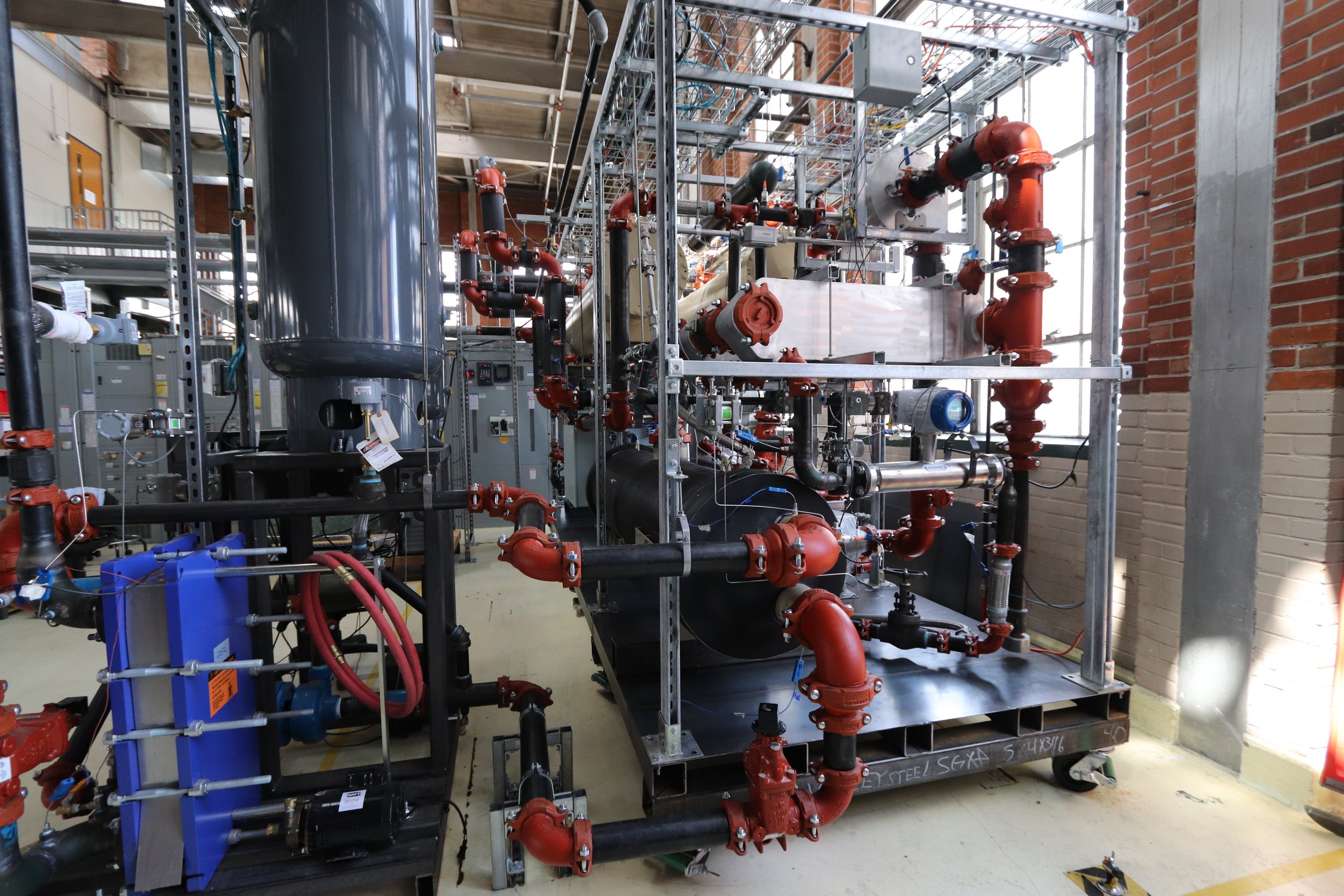
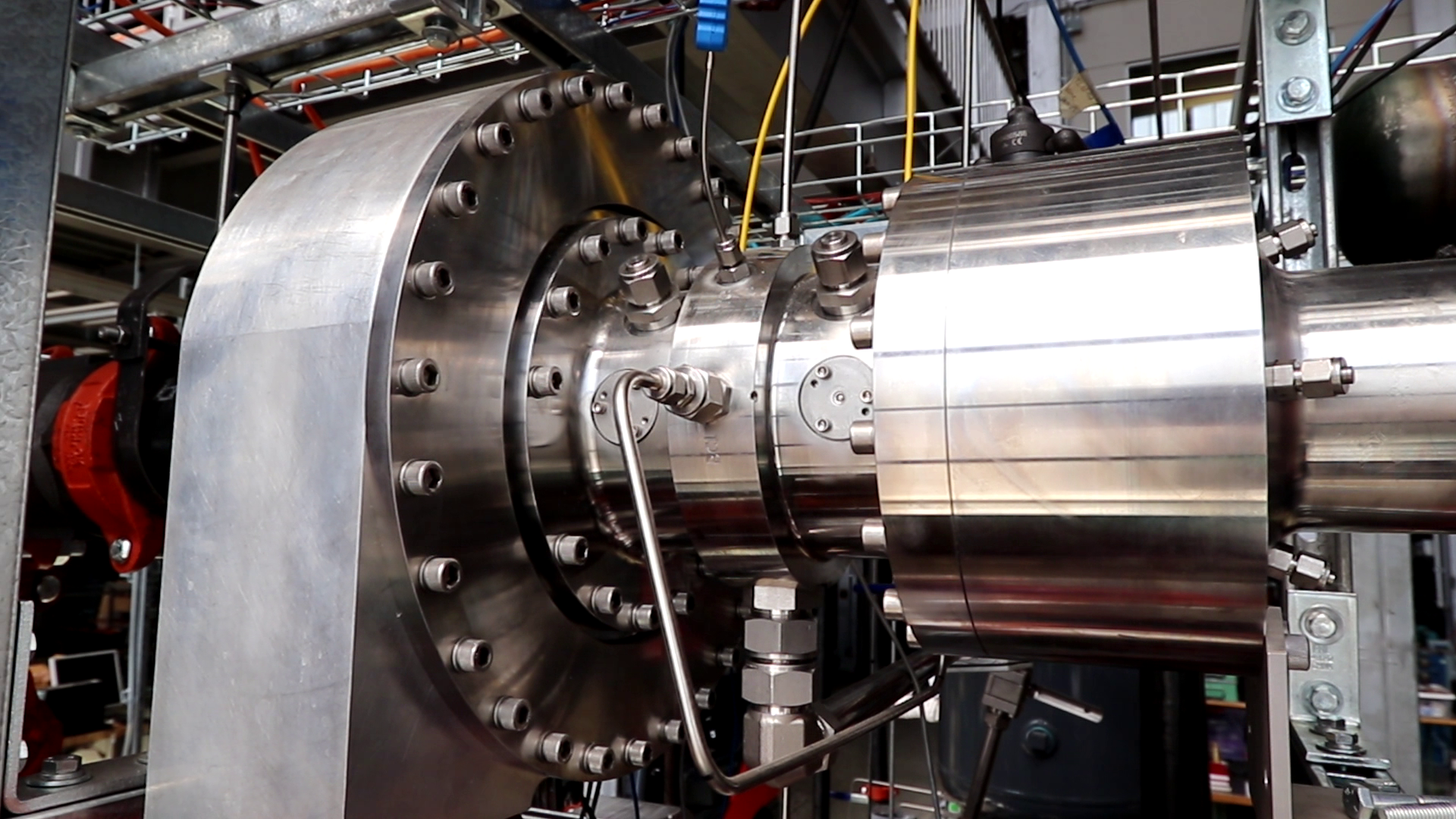
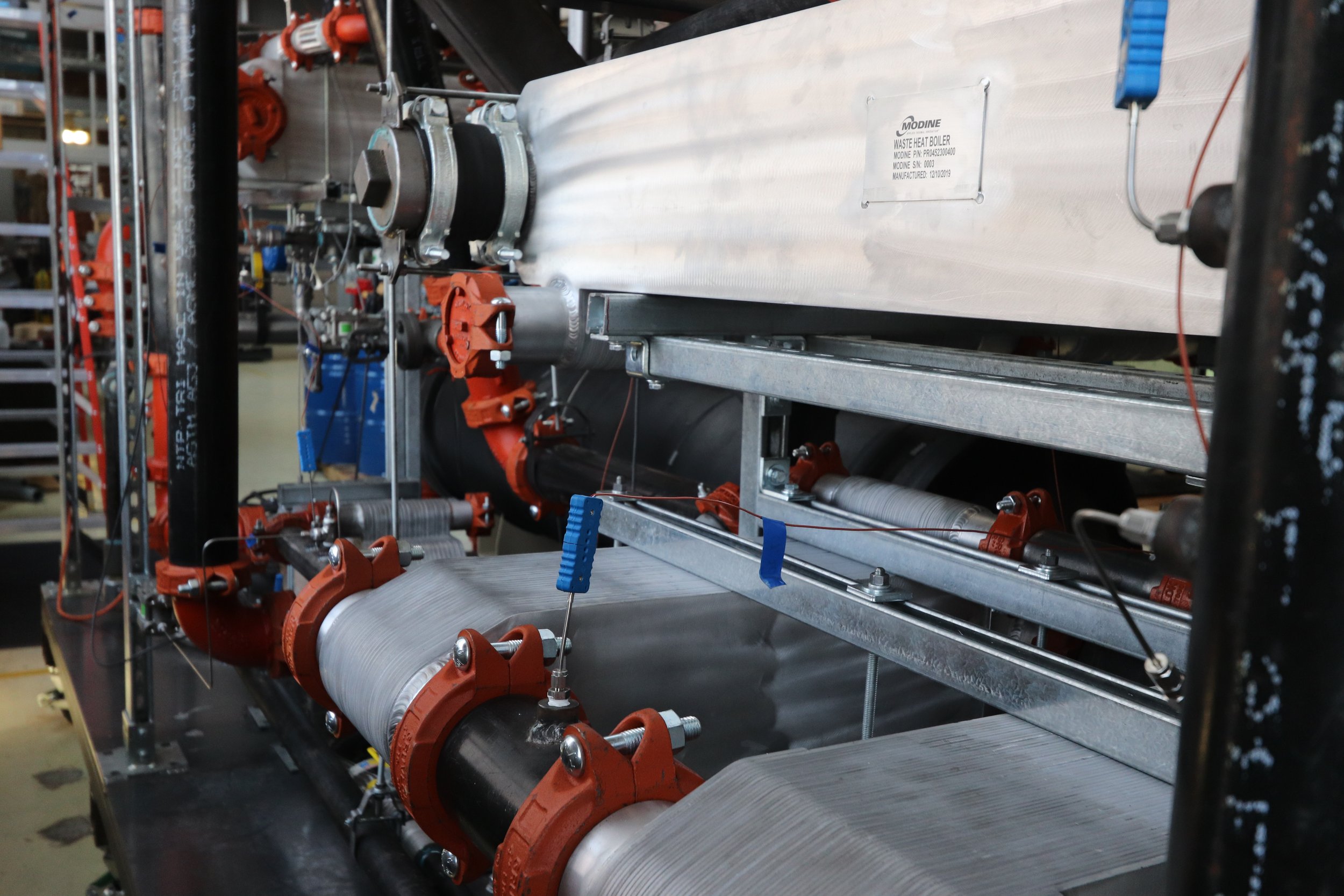
As we know, fossil-fuel driven power generation is only about 30-40% efficient, which means there is an opportunity to utilize waste heat from on-site generators. Since data centers have no need for heating, but massive cooling loads, this is a great use case for the Turbo-Compression Cooling System to capture heat and convert it to useful cooling. Our team at the Powerhouse is actively working towards commissioning a 300 kW Flexible Fuel Engine from 2G Energy Inc. and performing a field demonstration of the engine and the TCCS as flexible energy system for data centers.
Recent TCCS Publications:
Experimental validation of a hybrid electric organic Rankine vapor compression cooling system (2025)
Desalination of Hypersaline Brines
Team: Joe Huyett, Joy St. Clair Past: Brandi Grauberger Partners: Vanderbilt University, National Alliance for Water Innovation, Tiezheng Tong, Shihong Lin

As the world population increases, and water availability decreases through time, we are sure to see a decrease in the accessibility of water or people around the world. The 2018 United Nations World Water Development Report states that by 2050, over 6 million people could be living under water scarcity. Right now, over 2 billion people live under prolonged water stress, and at least 4 billion people live under water stress at least one month of the year.
Water scarcity stems from two major branches. First, the amount of water available per capita decreases significantly as our populations grow. In arid regions, as climate change takes hold, the total water supply is expected to decrease as well, compounding the issue of limited water availability. However, the second issue of water scarcity is of higher concern. Ill management of our current water supplies has led to a significant decrease in the quality of water available for human use. The future of water depends on us to start creating new and reviving old water sources through water treatment.

he REACH CoLab has conducted research on the desalination of concentrated brines that are generated throughout industry. They are by-products of seawater desalination through reverse osmosis, beef and cheese processing, inland brackish water desalination, oil and natural gas extraction, and more. Our goal is to increase the amount of water recovered from water treatment technologies by further treating their wastewaters into a clean water source and dry salts through zero-liquid discharge.
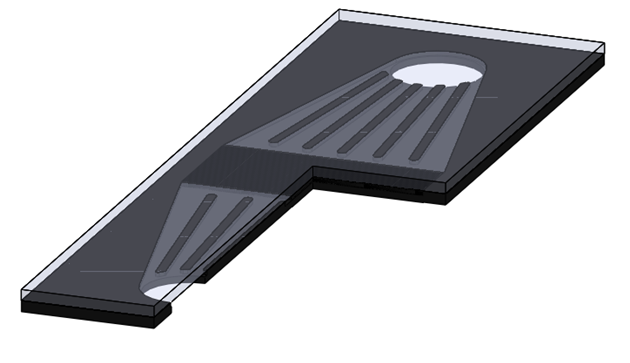
Technologies that we study include membrane distillation, mechanical vapor compression, and electrodialysis. These three systems are able to remove more salt from brines that other desalination technologies, such as reverse osmosis which is pressure driven, because they are thermally and electrically driven. Unfortunately, these technologies are expensive to build and operate and are much less efficient in producing clean water. However, because these systems are thermally and electrically driven, we evaluate the potential of these systems to operate using low-grade thermal waste heat and renewable electricity for power.
This research evaluates the sustainability and the thermodynamic, procedural, and economic feasibility of new concentrated brine desalination technologies being implemented in today’s world.
Flexible Carbon Capture and Storage (FLECCS)
Ethan Markey, Joe Huyett Partners: ION Clean Energy, Storworks Power, Braden Limb

Fossil fuel-based power plants generate 80% of the United States’ electricity and provide a reliable generation source for both base and peak power demands. However, as environmental policies continue to be adopted these power plants will be required to use carbon capture and sequestration (CCS) which has a detrimental impact on the power plant’s performance. This impact originates from the large heat load required for carbon capture solvent regeneration which restricts the power plant’s power output and operation flexibility. Therefore, the goal of this research is to evaluate the feasibility of using thermal storage technologies in combination with natural gas combined cycle (NGCC) power plants and CCS to minimize the impact of solvent regeneration. Thermal storage is expected to minimize the impact of CCS on the power plant by providing the heat load required for solvent regeneration during times of peak demand which will allow the plant to operate unrestricted and at full power.

In total, sixteen unique thermal storage configurations are being evaluated from four thermal storage categories: Brayton cycle heat pump, vapor compression heat pump, resistive heating, heat recovery steam generator steam extraction for storage. The viability of these systems is being determined by evaluating each configuration on thousands of real-world Locational Marginal Pricing (LMP) profiles from the New York Independent System Operator and California Independent System Operator electricity markets using a 30-year discounted cash flow analysis. In order to perform this analysis, three interconnected models have been created: a thermodynamic model, an operation model, and an economics model. All models have been validated with external models to ensure model fidelity. The results of this analysis will be compared to the performance of a base power plant (NGCC with CCS and no thermal storage) to determine the impact of thermal storage on power plant performance. Initial results show that seven of the thermal storage configurations perform better than the base power plant over some of the LMP profiles evaluated. The best performing configuration was a vapor compression heat pump that used flue gas as the working fluid and had both hot and cold thermal storage units. This configuration performed better than the base power plant on 38.7% of the LMP profiles. These results show that thermal storage has the potential to mitigate the impact of carbon capture solvent regeneration on NGCC power plants in some scenarios.